

























At Only Orphans Cote, we not only secure FDA and EMA orphan drug designation for our clients — we take them all the way to market, with the insight that only comes from having sat on the other side of the desk at FDA.
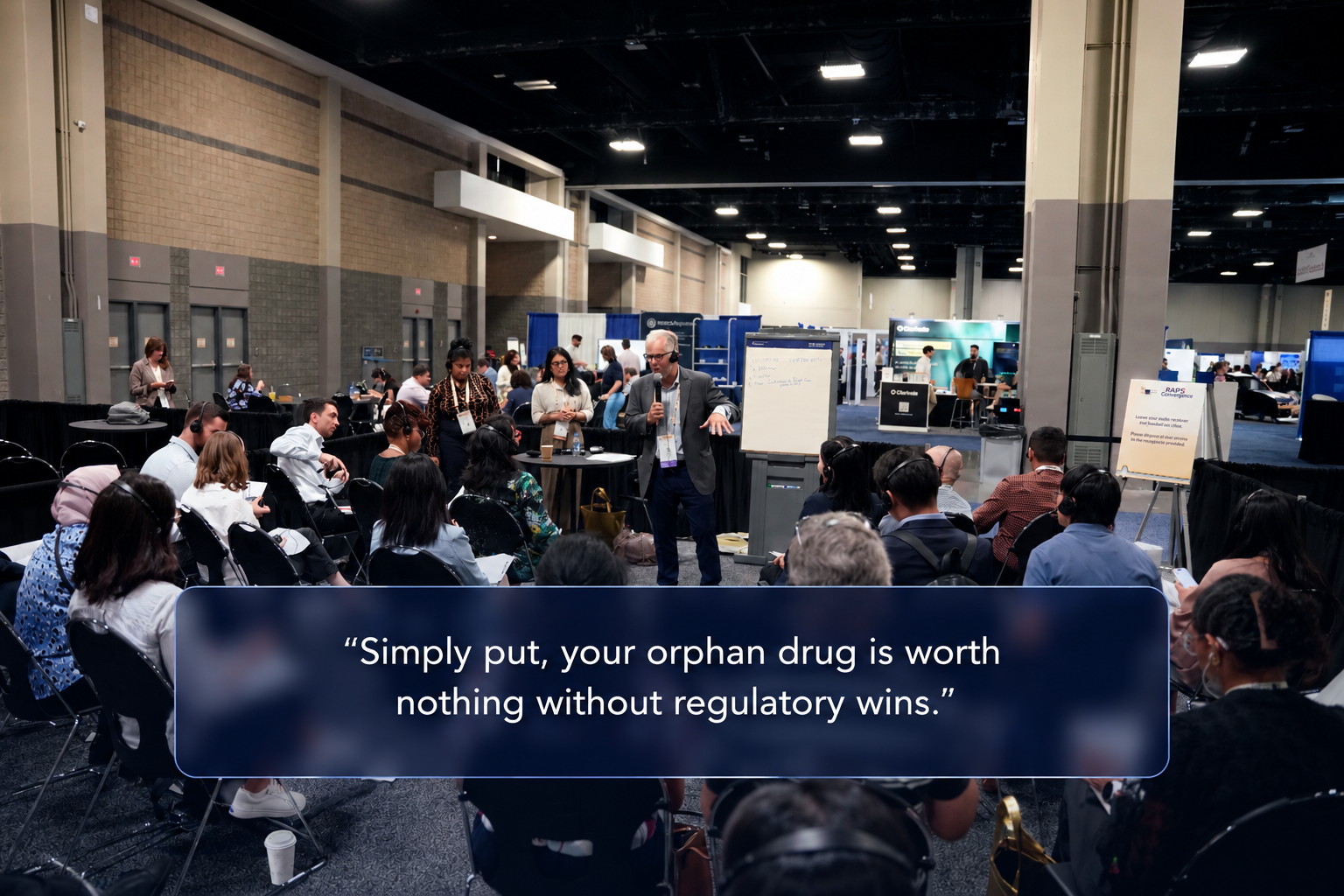
"Simply put, your orphan drug is worth nothing without regulatory wins."
Dr. Tim Cote
Some programs come to us at the first inkling of an idea. Others arrive years in, with a decision that has to be right.
See all servicesIf you have any in-vivo data relevant to a rare disease, you’re ready to act.
Your program is in trials and the agency interactions are getting complex and real.
You are heading for the market. We are here to guide you.
Years in orphan drug regulatory affairs
Orphan drug designations decided at FDA by Dr. Cote
Designation applications written by Dr. Cote
Clients guided worldwide

The most elegant scientific experiments are useless if they won’t advance you at the FDA. Regulatory affairs can be every bit as creative and rewarding as any other life science discipline. For you investors, the value add of regulatory affairs is far more direct.
It’s always free to have a chat about your drug. If we can’t help you, we’ll say so. More likely, we’ll both learn a thing or two.
Contact Us

A company that is able to demonstrate "promise" that its drug is effective for treating a rare disease or condition using clinical data or data from animal models of the human rare disease, can submit an application for orphan designation to the FDA or EMA.
According to the 1983 Orphan Drug Act, companies that received orphan drugs designations are entitled to: 1. Market exclusivity for seven years following marketing authorization. This means you and you alone can market your product for the treatment of the designated rare disease. This form of market protection is better than a patent because it relies upon the FDA's promise, in contrast to the uncertain success of patent attorneys. This strong exclusivity has yielded high price points for orphan drugs (median 100,000 USD per patient per year). 2. Eligibility to receive tax credits upon orphan designation, underscoring the importance of early application. 3. Exemption from the PDUFA Fee. This can yield roughly 4.7 million dollars in savings. 4. Exemption from the Pediatric Research Equity Act (PREA). The complications of pediatric drug development can be substantial. But that's not all. The four points above are only what's written into the law. In the biotech asset ecosystem, orphan designation also signals regulatory favor and execution capacity, and it removes designation uncertainty. The smart money knows that "it's obviously an orphan" is a red flag.
It does. Biotech companies can reap more value from submitting their applications sooner rather than later for the following reasons: 1. Early application increases the asset's value, thus improving the term sheets a biotech company can expect with potential investors. 2. Once orphan designation is received, a biotech company can collect tax credits for clinical trial expenses incurred in the USA. These tax credits likewise impact term sheets with investors. 3. Receiving FDA or EMA orphan designation demonstrates a company's competence in regulatory interactions and enhances the credibility of its drug development program.
Absolutely! Half our work is orphan designation both at FDA and EMA, the other half is getting orphan drugs through the review division as marketed products; Pre IND Meeting, Type A/B/C/D Meetings, Breakthrough Therapy Designation, Fast Track Designation, INTERACT Meetings, OOPD Meetings, IND Submission, RMAT. At Only Orphans Cote, we do everything to get your orphan drug licensed and marketed in the US.